
Imagine you’re in a busy textile shop in Varanasi. You hold a beautiful silk saree that feels like a piece of history. You’re getting ready for your wedding and want something that will last forever. But, the shopkeeper talks about two prices, making you wonder about real zari vs tested zari.
Banarasi sarees are more than clothes; they are a cultural legacy in Indian tradition. Picking the right thread is key for your investment. It decides how long and valuable your garment will be.
Knowing the difference between these materials helps you make a smart choice. Whether you want traditional quality or something more affordable, understanding what you buy is important. It ensures you get what you pay for.
Key Takeaways
- Banarasi sarees are a big part of India’s rich textile heritage.
- It’s important to know the difference between real metallic threads and modern ones.
- The choice affects both the price and how long your saree lasts.
- Real threads often mean a higher value for keepsake pieces.
- Modern options are cheaper for those looking for a similar look.
Understanding the Heritage of Banarasi Zari
To truly appreciate a Banarasi saree, you must first understand its rich legacy. This ancient craft is more than fashion. It’s a testament to human ingenuity that has lasted for centuries. When you do a genuine zari comparison, you’re looking at the historical and artistic value of the piece.
The Significance of Zari in Indian Textiles
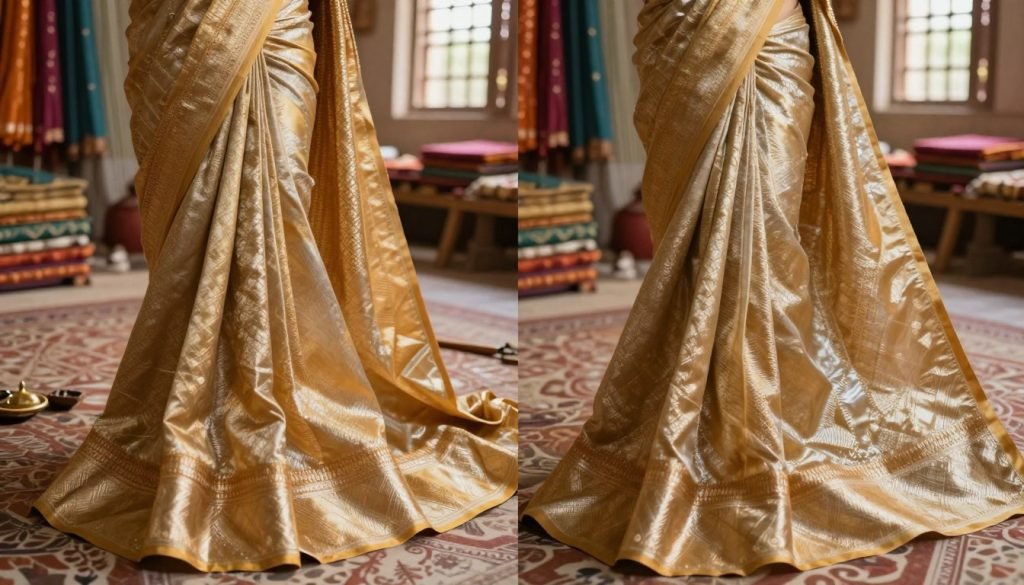
Zari is a symbol of luxury and status in Indian culture. These shimmering threads, made from fine silver or gold, turn simple silk into a masterpiece of elegance. Real metal in a garment means wealth and is key for weddings and religious events.
Zari is more than beautiful. It connects families through heirlooms. Knowing this makes you better at choosing a genuine zari comparison for your next piece.
Evolution of Zari Craftsmanship in Varanasi
Varanasi has been at the heart of zari for generations. Master weavers have improved their skills, from manual spinning to modern methods. Though tools have changed, the meticulous labor needed for quality zari remains the same.
The table below shows how the craft has evolved from traditional to modern:
| Era | Primary Material | Weaving Method | Market Focus |
|---|---|---|---|
| Ancient | Pure Gold/Silver | Hand-spun | Royalty |
| Colonial | Gold-plated Copper | Hand-loom | Elite Class |
| Modern | Synthetic/Tested | Power-loom | Mass Market |
This evolution shows why a genuine zari comparison is key for today’s buyers. It helps us see the artistry in both traditional and modern zari pieces.
Defining Real Zari vs Tested Zari
The real vs tested zari difference is key for saree lovers. Knowing the materials in traditional Indian clothes is important. This knowledge helps you choose quality and lasting items.
What Constitutes Real Zari
Real zari is a true work of art. It has a silk thread core wrapped in silver wire. Then, it’s covered in real gold for a shiny look.
This material is precious because it keeps its shine for years. Choosing real zari means you’re getting a timeless heirloom for your family.
Understanding Tested Zari and Its Purpose
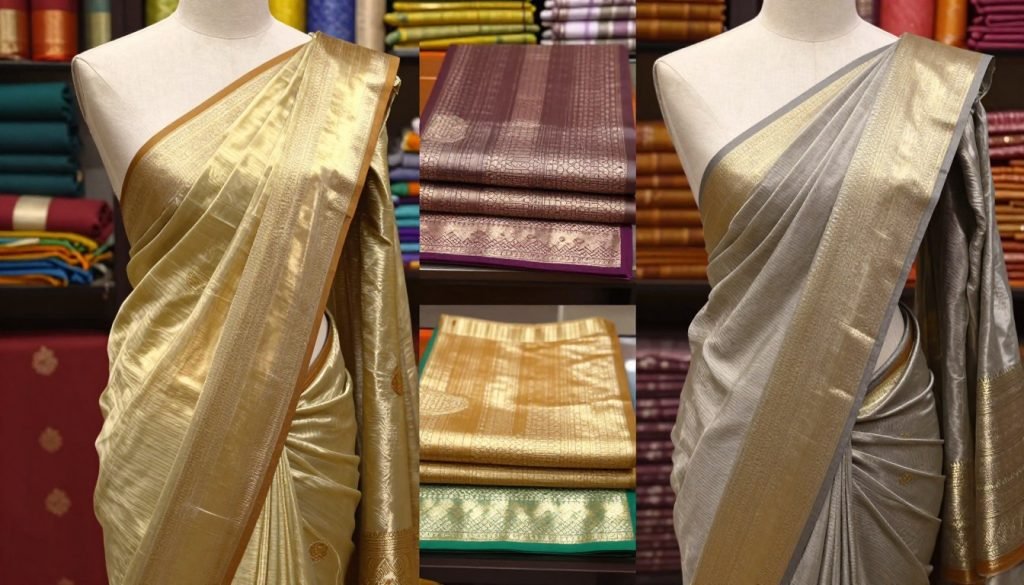
Tested zari is a budget-friendly option. It looks like real zari but costs less. It’s made with copper or brass instead of gold and silver.
This thread is great for occasional wear. It’s perfect for special events where you want to look good without spending a lot.
The Role of Copper and Silver in Zari Production
The type of metal in your thread affects how it looks over time. Real zari uses silver for its softness and gold for protection. This keeps it shiny.
Tested zari, on the other hand, uses copper. Copper is stiffer and can tarnish easily. Knowing the difference helps you choose based on what you value more: lasting beauty or saving money.
Technical Composition and Manufacturing Processes
Every Banarasi weave has a special engineering process. This process makes sure you’re wearing real zari. Knowing how it’s made shows the skill in your traditional clothes.
From raw metal to shiny thread, it’s a unique journey. This journey shows the art of making zari.
The Metallurgy of Authentic Gold-Plated Zari
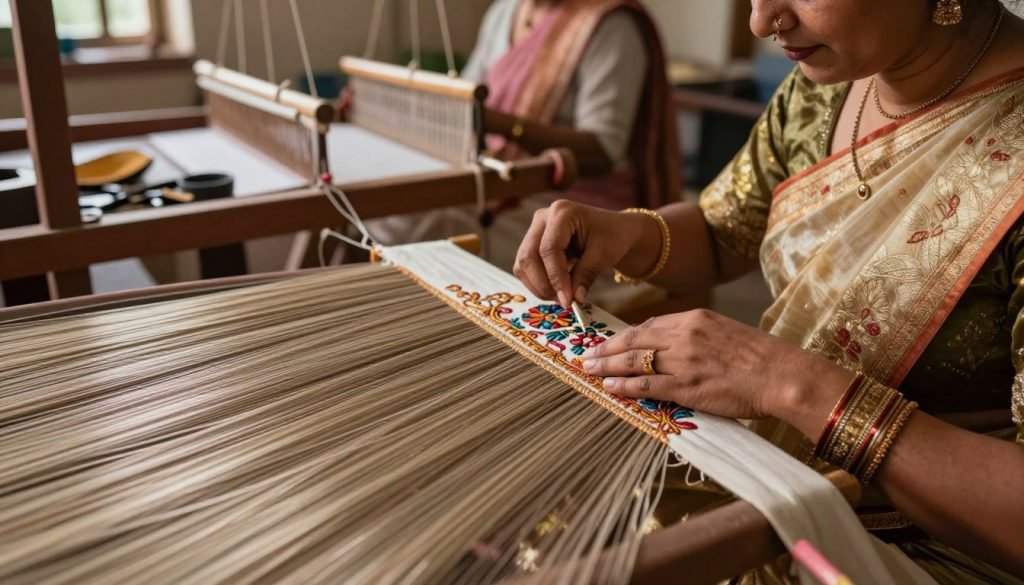
Real zari is amazing. It starts with pure silver wire. Then, it’s flattened and wrapped around silk.
To get the golden look, the silver wire gets a thin layer of real gold. This keeps the thread shiny for a long time.
How Tested Zari is Engineered for Affordability
Tested zari, or imitation zari, looks similar but costs less. It uses copper or brass wire instead of precious metals. Then, it gets a fake gold look from chemicals or thin films.
This cheaper method makes sarees more affordable. But, the fake gold might wear off, showing the real wire underneath.
Comparing Silk Base Materials in Zari Weaving
The base of your saree matters a lot. Real zari uses pure mulberry silk. This silk is strong and supports the heavy metal threads well.
Tested zari, on the other hand, uses synthetic silk or lighter silk. This makes the saree cheaper but less durable. It doesn’t feel as luxurious as real zari.
| Feature | Authentic Zari | Tested Zari |
|---|---|---|
| Core Material | Pure Silver | Copper/Brass Alloy |
| Surface Finish | Gold Electroplating | Synthetic Metallic Film |
| Base Fabric | Pure Mulberry Silk | Silk Blends/Synthetic |
| Longevity | High (Heirloom quality) | Moderate (Occasional wear) |
Visual and Tactile Differences
You can easily spot the real vs tested zari difference by paying close attention to how the threads interact with light and touch. Both types aim to provide a regal aesthetic. But, their physical properties vary significantly due to their distinct metallic compositions. Learning these traits will help you make confident decisions when shopping for traditional Indian attire.
Analyzing the Luster and Sheen
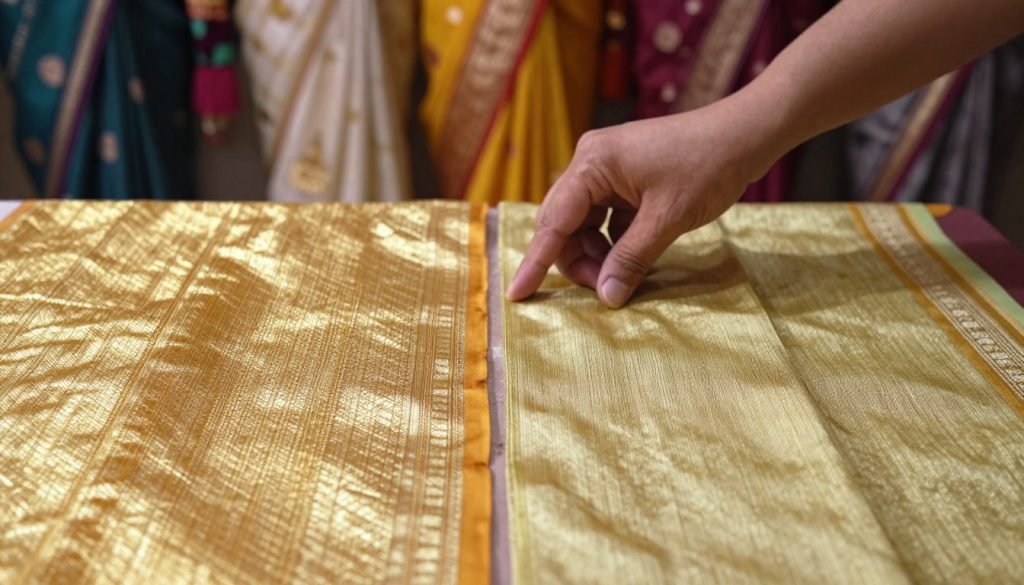
Authentic zari, crafted with genuine silver and gold, exhibits a soft, muted glow that feels natural to the eye. It does not reflect light with a harsh, mirror-like intensity. Instead, it offers a sophisticated shimmer that remains consistent even in low-light conditions.
In contrast, tested zari often relies on synthetic metallic coatings or copper-based alloys to mimic the look of precious metals. This results in a high-shine finish that can appear overly bright or brassy. If the thread looks exceptionally shiny or reflects light like a polished mirror, it is likely a synthetic alternative.
Weight and Drape Characteristics
The weight of the saree is a primary indicator of the materials used in the weaving process. Real zari is inherently heavier because it incorporates actual silver and gold, which are dense metals. When you hold a saree with authentic zari, you will notice a substantial, luxurious weight that contributes to a graceful drape.
Tested zari is engineered for affordability and lightness, often using lighter base metals or plastic-coated threads. Consequently, these sarees tend to feel much lighter and may not hold their pleats or drape with the same fluid elegance as their authentic counterparts. You will find that the fabric moves differently, often lacking the grounded feel of a traditional handloom masterpiece.
Texture and Skin Sensitivity Considerations
Beyond visual appeal, the tactile experience is crucial for long-term comfort. Real zari, when woven by skilled artisans, is typically smooth and refined, making it gentle against the skin. However, because it is a metal, it can sometimes feel slightly cool or firm to the touch.
Tested zari can occasionally feel rough or scratchy, especially if the metallic coating is applied unevenly or if the base thread is of lower quality. For those with delicate skin, this texture can cause irritation during extended wear. Understanding these physical nuances is the most effective way to learn how to distinguish real zari from tested zari before you finalize your purchase.
Durability and Longevity Comparison
Keeping your Banarasi saree beautiful means knowing about zari. The threads used in weaving affect how long your clothes last. Learning about these threads helps keep your clothes for years to come.
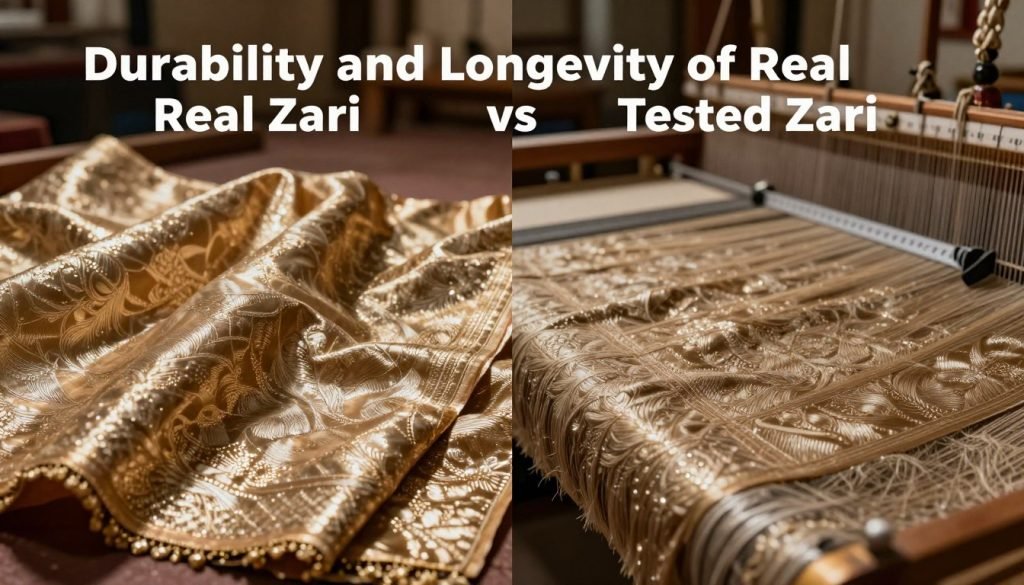
Oxidation Resistance in Real Zari
Real zari uses pure silver or gold-plated silver threads. These metals don’t easily break down. But, silver can turn dark when it meets air and water for a long time.
This change can make the thread look older. But, with the right care, it can shine like new again. Real metal keeps its shape better than fake ones.
How Tested Zari Ages Over Time
Tested zari is made to be cheaper. It uses copper or fake materials covered in shiny chemicals. It looks good at first but doesn’t last as long as real metal.
Tested zari loses its shine quickly. It might turn dull or show its true color. Once it changes, it can’t go back to its original look.
Maintenance and Storage Best Practices
To keep your sarees perfect, you need to store them right. Moisture and sunlight are bad for your clothes.
Here are some tips to keep your sarees looking great:
- Wrap in muslin: Store your sarees in breathable cotton or muslin to stop moisture.
- Avoid plastic: Don’t use plastic bags, as they trap moisture and speed up damage.
- Rotate your collection: Sometimes, take out your sarees to air them and avoid creases.
- Keep away from perfume: Don’t spray perfume or deodorant on your zari, as it can tarnish fast.
By taking good care of your Banarasi saree, you keep its beauty alive. Regular care helps both real and fake zari stay beautiful longer.
Price Points and Market Value
Understanding the cost of Banarasi sarees means looking deeper. The price shows the quality of materials and the skill needed to make them.
Investment Potential of Real Zari Sarees
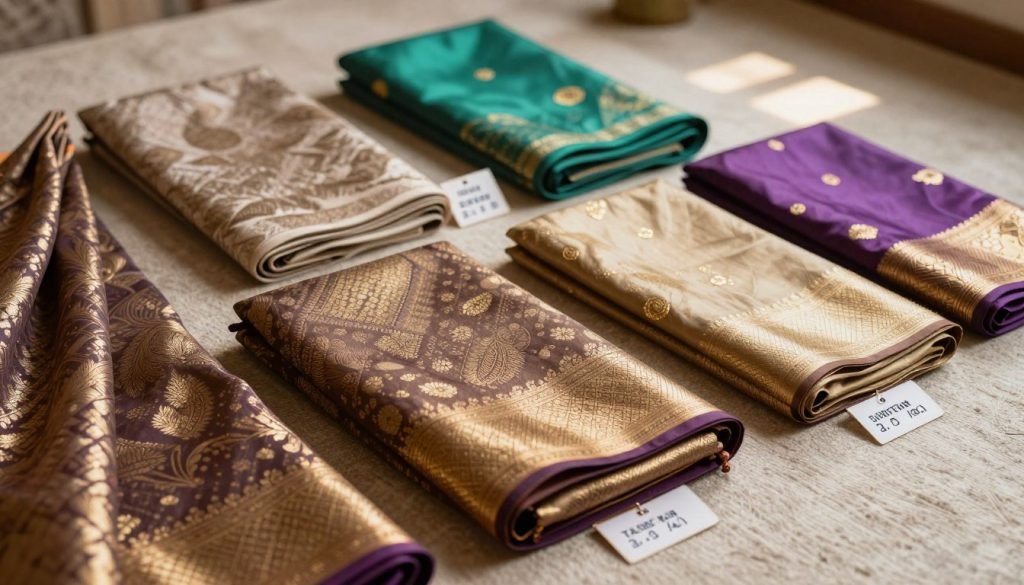
Buying a saree with real zari is like getting a valuable item. These sarees have silver and gold, making them worth more over time.
Many families keep these sarees as family treasures. They are expensive but the value of the metals keeps them valuable.
Why Tested Zari Offers Value for Occasional Wear
For special events, tested zari is a smart choice. It looks as good as real gold but costs less.
This choice lets you add to your wardrobe without spending too much. You get the look you want for special times without breaking the bank.
Identifying Fair Pricing in the Current Market
Finding a good deal in today’s market takes careful attention. Make sure to compare the saree’s weight and design to its price. This helps avoid paying too much for fake items.
Good sellers will tell you if the zari is real or tested. Knowing this helps you buy what you want without spending too much.
Practical Methods for Zari Authenticity Verification
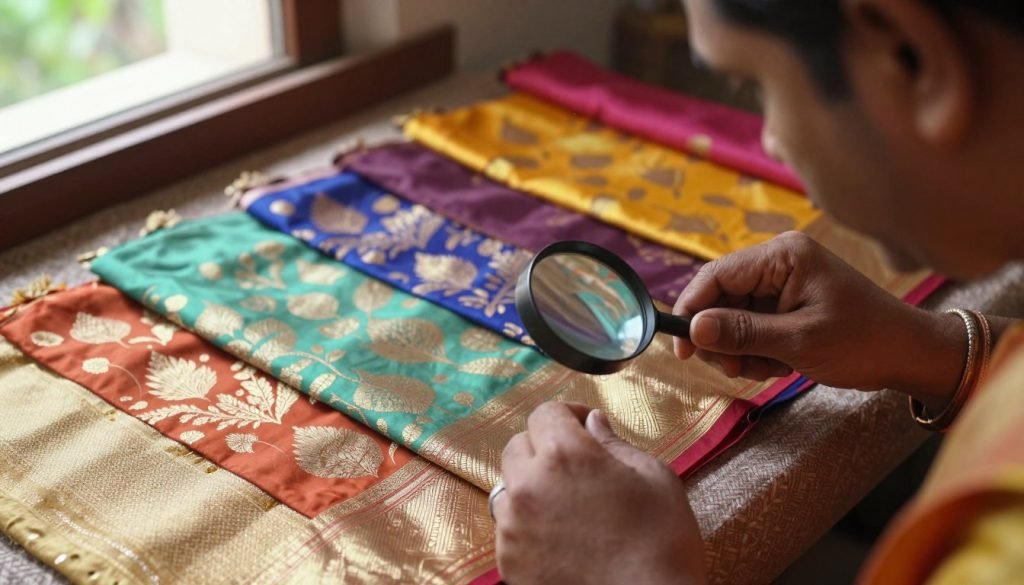
Learning how to distinguish real zari from tested zari is key. Visual checks are a good start. But, deeper genuine zari comparison needs more detailed methods. You can do simple checks at home to feel sure about your collection.
The Burn Test and Chemical Indicators
The burn test is a classic way to check metal content. Burning a small piece of real zari shows the silk core turns to ash. The silver or gold stays as a shiny bead.
On the other hand, tested zari might melt or smell bad because it’s made of plastic or copper-alloy.
Chemical tests are also great for authentic zari validation. Experts use mild acid on hidden parts of the thread. Real metal won’t tarnish or change color fast. But, fake metals will react and change color quickly.
Professional Appraisal and Certification
For valuable items, DIY zari quality testing might not be enough. A professional appraisal gives you a certificate of authenticity. This is key for insuring your sarees or keeping them as family treasures.
Experts use X-ray fluorescence (XRF) to check the metal without harming the fabric. This zari authenticity check helps you know your saree’s true value. Always go to trusted weavers or labs for these services.
Common Misconceptions in Zari Quality Testing
Many think a heavy saree means it’s real zari. But, this is not true. Heavy materials or coatings can make a saree seem heavier. So, weight alone is not a reliable test.
Also, shiny zari doesn’t always mean it’s real. Modern tech can make synthetic threads look like precious metals. Knowing this helps you make smart choices and avoid scams.
Choosing the Right Saree for Your Needs
Choosing a Banarasi saree depends on the occasion and your needs. Knowing the difference in metallic threads helps you pick the right one. This way, your saree will bring you joy for many years.
Selecting for Weddings and Heirlooms
For weddings or heirlooms, authenticity is key. These pieces are meant to last, so authentic zari validation is crucial. Look for high silver and gold content to keep the fabric shining.
Real zari lasts longer than fake ones. It keeps cultural history alive. Always check the craftsmanship to ensure it’s top quality.
Selecting for Festive and Casual Occasions
For festive or casual events, look for a saree that’s affordable yet beautiful. Zari quality testing helps find pieces that are both stunning and budget-friendly. You can find great options for occasional wear.
A quick zari authenticity check helps you know what you’re buying. This lets you pick a saree that matches your style. You don’t need the most expensive materials for a classy look.
Balancing Budget with Aesthetic Expectations
Finding the right balance between budget and style is key. Use zari testing methods to find good deals without sacrificing quality. Remember, value depends on how you plan to use it.
Regular zari authenticity verification ensures you get what you pay for. Whether it’s expensive or not, knowing it’s genuine makes it more enjoyable. Trust your choice and enjoy your Banarasi saree.
Conclusion
Choosing the right Banarasi saree is all about matching your style with your lifestyle. You now know how to tell real zari from tested zari. This knowledge helps you make choices that fit your budget and love for Indian textiles.
Real zari is perfect for special occasions and keeps its shine for years. It’s a symbol of luxury that lasts. Tested zari is great for everyday wear or parties. It’s affordable and still beautiful.
Knowing quality means your clothes show off your taste and values. Keep this guide handy when shopping in Varanasi or at places like Taneira or Nalli. You’re set to create a collection that honors handloom weaving and meets your needs.