
Did you know over 70% of luxury textiles sold as traditional pieces are fake? These fakes threaten the ancient weaving traditions that have been elegant for centuries. Buying an authentic handloom banarasi saree means you support master artisans.
The beauty of an indian handloom saree is in its small imperfections. These prove it was made by a person. Fake ones lack the soul and depth of real ones. Knowing the difference helps protect your money and respects the weavers.
Becoming a smart buyer helps keep this important cultural heritage alive. You can make sure real craftsmanship keeps going in a world of fast fashion. Let’s look at how to tell a real treasure from a fake one.
Key Takeaways
- Understand the difference between machine-made and manual weaving techniques.
- Recognize the cultural value of supporting traditional textile artisans.
- Learn to identify specific physical markers of high-quality craftsmanship.
- Protect your financial investment by avoiding common market imitations.
- Develop a keen eye for the unique textures of premium natural fibers.
The Heritage and Value of an Authentic Handloom Banarasi Saree
Wearing an authentic handloom banarasi saree is like carrying history with you. These clothes are more than just clothes. They tell a story of culture and tradition from Varanasi.
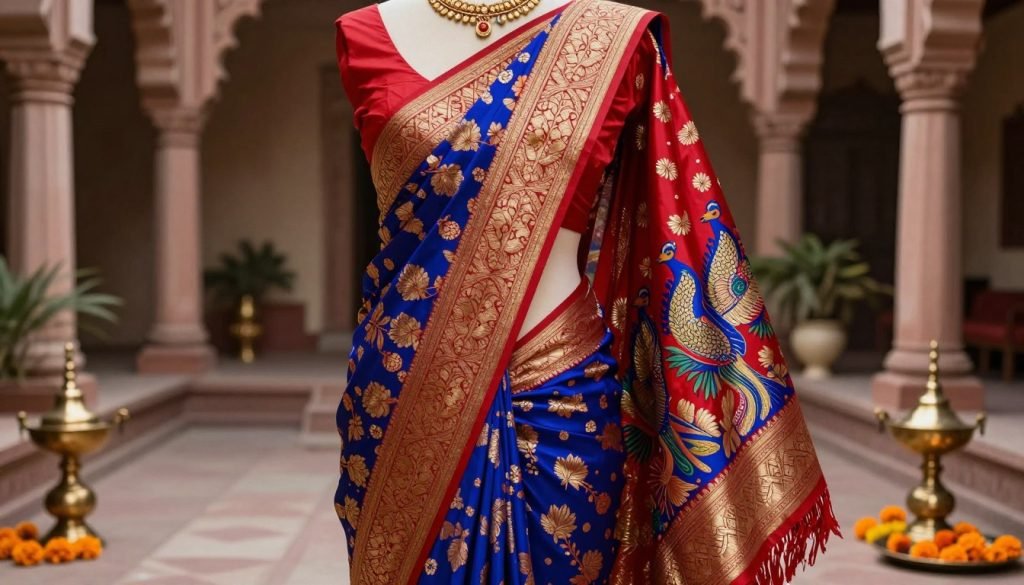
Making an exquisite banarasi saree is a long and careful process. Skilled weavers, who learned from their families, weave each thread with love. Buying a real one helps these weavers make a living.
Choosing a wedding banarasi silk saree is more than just picking a dress. These fabrics become family treasures, growing in value and meaning over time. Here’s how handloom items differ from machine-made ones.
| Feature | Handloom Masterpiece | Machine-Made Alternative |
|---|---|---|
| Production Time | Weeks to Months | Hours |
| Artistic Detail | Unique and Intricate | Repetitive and Flat |
| Material Quality | Pure Silk and Real Zari | Synthetic Blends |
| Market Value | Appreciates Over Time | Depreciates Quickly |
Choosing authenticity helps keep Varanasi’s rich heritage alive. Your purchase helps save a dying art. The true value of your saree is in the human touch, something machines can’t match.
Check the Reverse Side of the Fabric
Many buyers only look at the front of a garment. But, the real story of a handwoven banarasi silk saree is on the back. Flipping the fabric shows the weaver’s hard work.
This simple step is the best way to check if a saree is real. It helps you know if you’re buying a true exquisite banarasi saree.
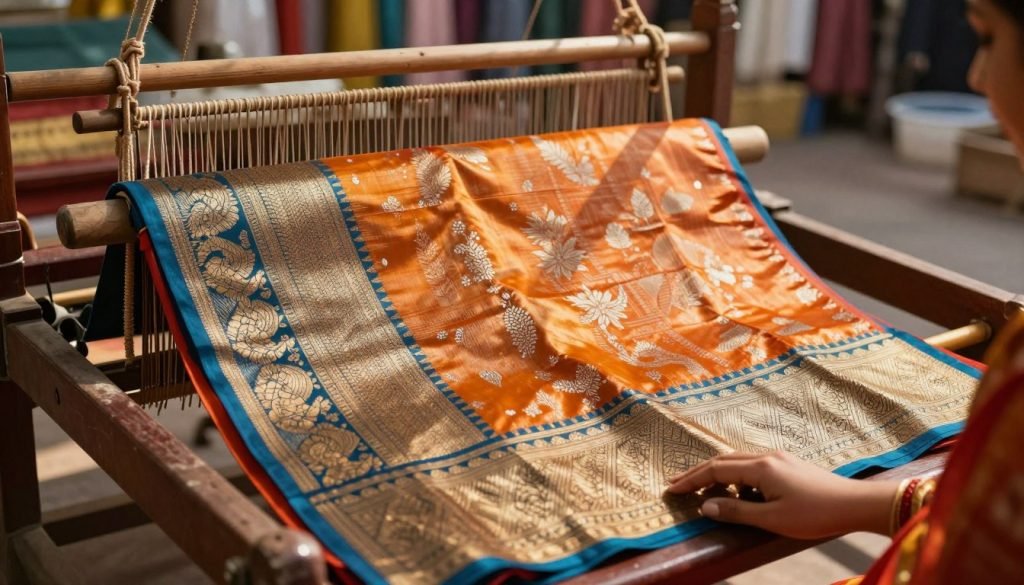
Identifying Float Threads in Handwoven Textiles
Look for float threads on the back. These are long, loose silk strands. They connect different designs.
In a handwoven banarasi silk saree, these threads show human touch. They prove the design was made by hand. Seeing these threads means you have a piece of art.
Distinguishing Between Hand-Loomed and Machine-Made Backings
Machine-made fabrics have a clean, uniform back. But, they lack the soul and character of handwoven ones.
A fake will look flat and even. It doesn’t have the depth of a real exquisite banarasi saree. When looking for a wedding banarasi silk saree, look for these hand-loomed signs. These small flaws show the saree’s true value and heritage.
Examine the Weave Density and Texture
The secret to finding a masterpiece is in the texture and weave density. When you hold a handwoven banarasi silk saree, your hands tell a story. True luxury is not just looks; it’s about feel and how it touches your skin.
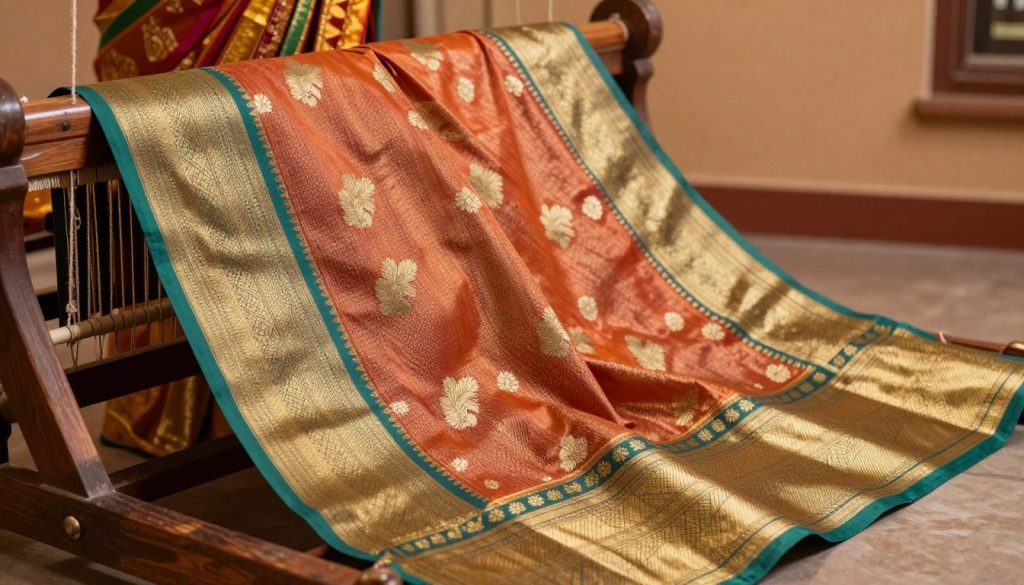
The Feel of Pure Silk Versus Synthetic Blends
Pure silk feels rich and natural. Synthetic blends can’t match this. No matter the tech, real silk’s distinctive luster and softness are unmatched. Synthetic fabrics feel cold and uniform, while silk is warm and real.
“Quality is never an accident; it is always the result of high intention, sincere effort, intelligent direction and skillful execution.”
To check quality, look for these signs:
- Temperature: Pure silk warms up fast in your hand.
- Texture: Real silk has a natural grip, not a plastic feel.
- Resilience: Good silk goes back to shape without lasting creases.
Analyzing the Uniformity of the Weave
Many think a perfect weave means top quality. But, small, natural changes show the finest quality banarasi saree work. These come from human hands, not machines.
When picking a banarasi saree for reception or a big event, check the weave. A tight weave means more threads and better durability. Love the small flaws, as they show the weaver’s hard work and the real nature of your dress.
Look for the Absence of Power Loom Marks
Did you know the most beautiful traditional banarasi saree has tiny marks made by humans? These marks show it’s different from mass-made clothes. Finding these marks is key for anyone who loves true heritage.
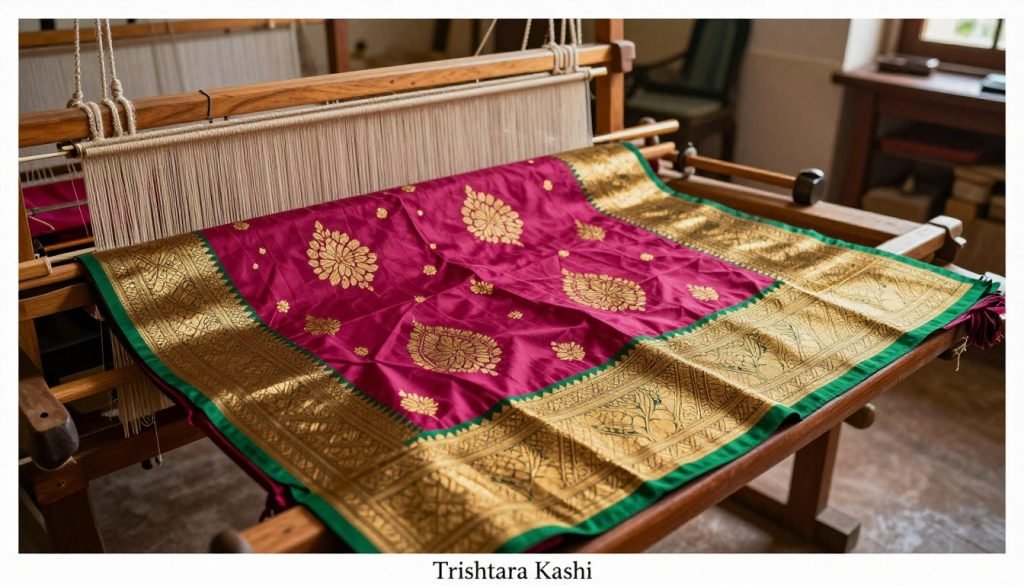
Understanding the Mechanical Precision of Power Looms
Power looms make things very uniform. Every thread is placed exactly the same. This makes the fabric look the same everywhere.
This uniformity might seem good, but it’s not for hand-woven items. Machine-made fabrics don’t have the rhythmic variation of real weaving. Look for these signs of power loom use:
- Perfectly symmetrical patterns that repeat without a single deviation.
- A flat, sterile texture that lacks depth or character.
- Edges that are cut with laser-like precision, showing no signs of manual finishing.
Spotting the Subtle Imperfections of Human Craftsmanship
True art is in the small, charming differences made by humans. Buying the finest quality banarasi saree means you value the weaver’s hard work. These small, intentional differences are not flaws; they show it’s real.
When picking a banarasi saree for reception, look for human touches:
Slight variations in the weave density show the weaver’s work. You might see tiny, organic shifts in the pattern. These subtle nuances make your garment special and full of history.
Verify the Zari Quality and Luster
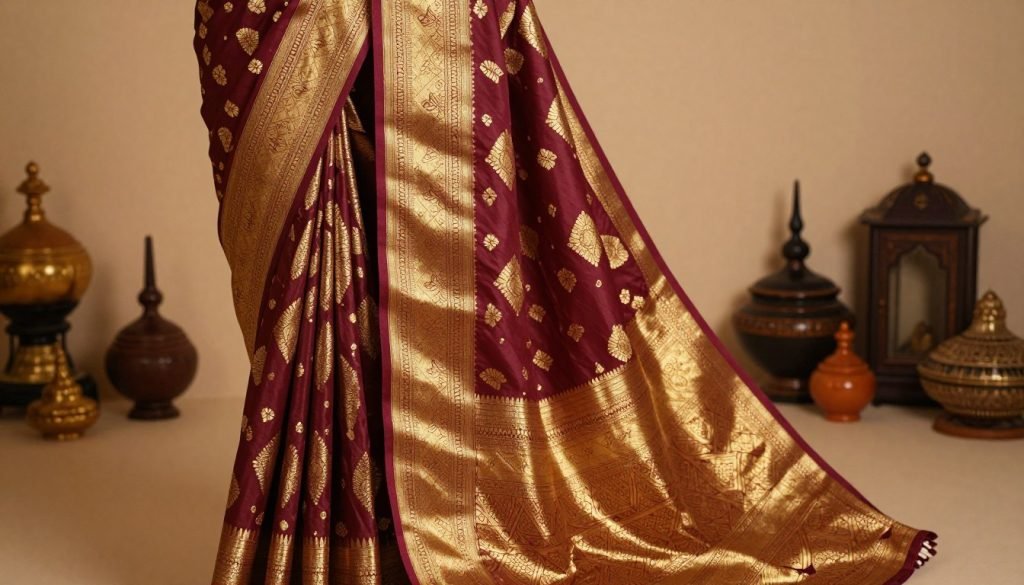
When looking for the best banarasi saree for wedding events, focus on the zari quality. The metallic thread work makes a traditional banarasi saree shine. It adds a regal glow to your outfit.
Testing for Real Gold and Silver Content
Real zari is made by wrapping silver or gold-plated copper wire around silk. Check the fabric’s back where the zari threads are visible. If it looks slightly dull or has a reddish-copper color, it’s high-quality.
Do a gentle scratch test on a hidden corner of the border. Real gold or silver keeps its color. Fake ones show a bright yellow or white base. Choosing real metal keeps your piece valuable for years.
“The true beauty of a handloom masterpiece lies in the patience of the weaver and the purity of the materials used, creating a legacy that transcends time.”
Why Authentic Zari Does Not Tarnish Easily
Quality zari is treated to stop oxidation. Fake zari turns black or green fast. But real metal threads stay bright. This is key for banarasi saree colours for weddings, as the shine must match the silk’s colors without fading.
| Feature | Authentic Zari | Imitation Zari |
|---|---|---|
| Luster | Soft, deep, and rich | High-gloss, plastic shine |
| Tarnish Resistance | High (lasts for years) | Low (turns dark quickly) |
| Weight | Noticeably heavier | Very lightweight |
| Flexibility | Soft and pliable | Stiff and scratchy |
By focusing on these quality signs, you make a timeless investment. Always check the shine in natural light to see how it looks with the fabric’s weave.
Inspect the Motifs and Design Intricacy
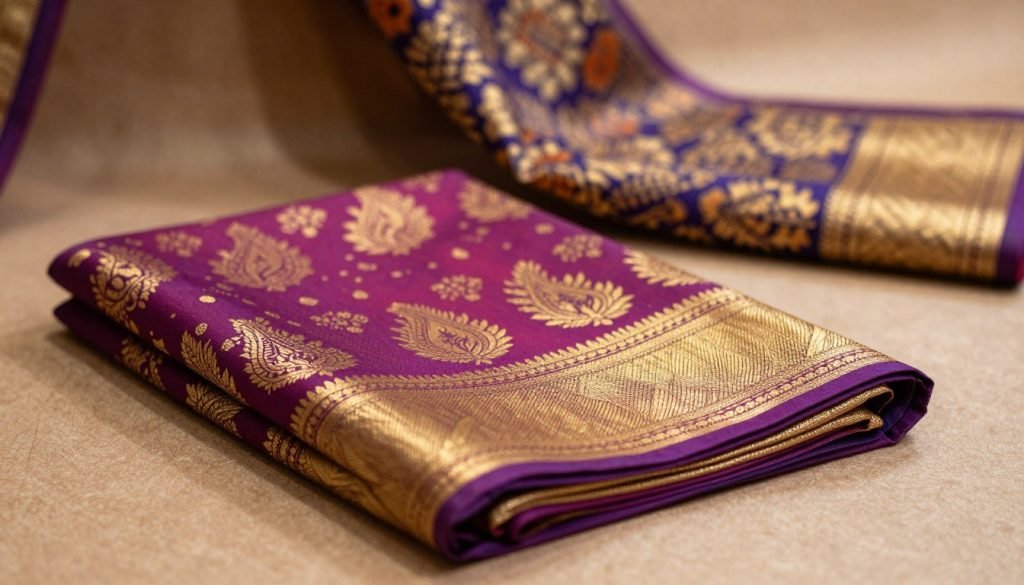
The beauty of a Banarasi saree is in its detailed motifs. Holding a indian handloom saree is like seeing art come to life. These patterns are woven, not printed, making the fabric feel rich.
Traditional Patterns Like Butidar and Shikargah
The Butidar and Shikargah motifs are famous. Butidar has repeating flowers or leaves. Shikargah shows hunting scenes, showing the weaver’s skill.
For a best banarasi saree for wedding, check the motifs. Real handwoven ones have sharp edges and even spacing. If the patterns are blurry, it’s not as good.
The Depth of Design in Hand-Carved Jacquard Cards
The sarees look three-dimensional thanks to hand-carved Jacquard cards. These cards tell the loom how to weave, creating depth. This makes the design look alive on the silk.
Think about how the designs look with banarasi saree colours for weddings. Deep colors make the gold or silver zari stand out. This makes your saree a timeless piece.
Assess the Weight and Drape of the Saree
When you hold a real textile, its weight tells a story. Synthetic imitations can’t match this. The feel of a garment shows its quality and realness.
Why Pure Silk Feels Heavier Than Polyester
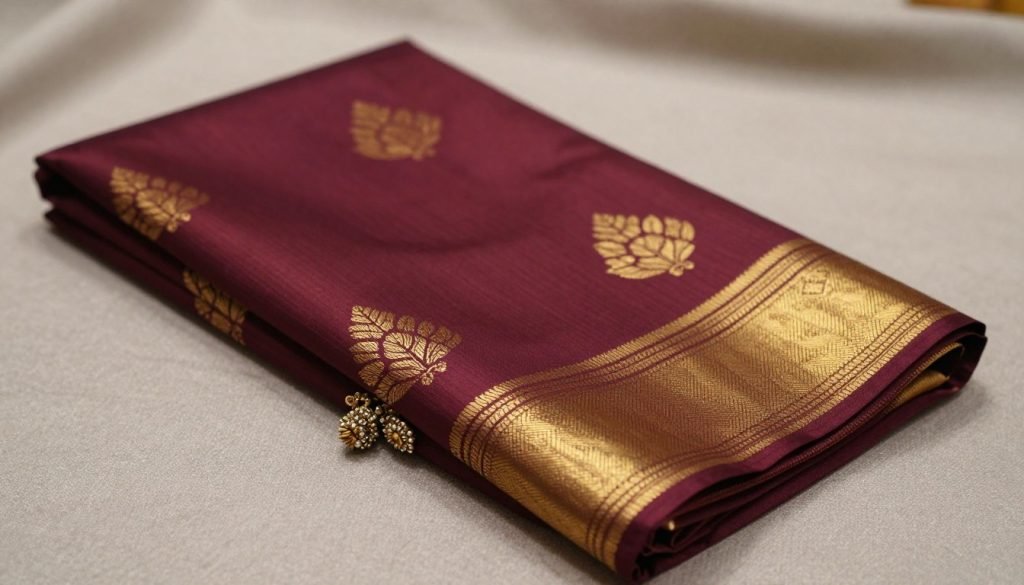
A pure silk banarasi saree feels heavy because it’s real. Polyester is thin and slippery. But silk is thick and feels good.
“True luxury is not just seen; it is felt in the weight of the weave and the grace of the fall.”
Synthetic fabrics feel too light or stiff. They don’t have the real feel of silk. Look for a substantial heft when you touch the fabric.
How the Fabric Drapes on the Body
The way a garment moves is key. A good one drapes smoothly, fitting your body well. This is important for a banarasi saree for wedding guest look.
Even if you want a lightweight banarasi saree for wedding, it should still feel heavy. It should fall beautifully, not look cheap. Authentic silk doesn’t look stiff like cheap fabrics.
Check for the GI Tag and Certification
When you buy a premium garment, you want to know it’s real. Looking for traditional textiles can be hard. But, official papers protect you from scams.
Choosing certified items means you support Varanasi’s real artisans.
The Importance of the Geographical Indication Tag
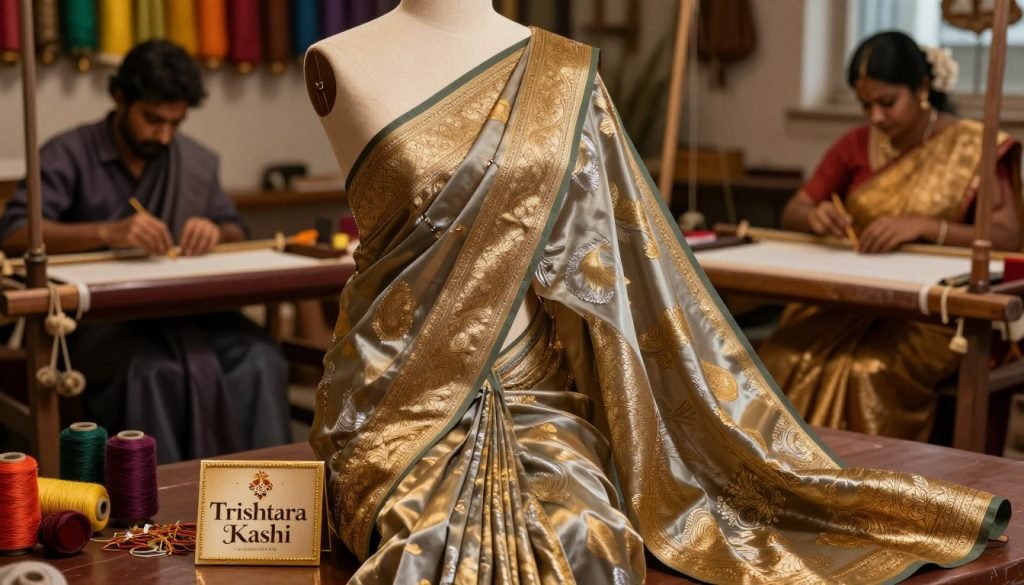
The Geographical Indication (GI) tag is more than a label. It’s a legal promise that your item comes from Varanasi. This tag shows it’s made the old way, passed down through families.
Buying a pure silk banarasi saree with the GI tag proves its true heritage.
Without this tag, you might get a fake item. Always check for the GI logo. This small step helps real weavers keep their craft alive.
Verifying Authenticity Through Official Handloom Marks
The Indian government has Handloom Marks for real items. These marks keep fake goods out of the market. They help you find the right banarasi saree for wedding guest or gift.
Look for the Handloom Mark tag on the fabric. It has a special code for checking. For a lightweight banarasi saree for wedding, make sure it’s certified. Trusting these official marks lets you buy with confidence, knowing your outfit is a piece of history.
Evaluate the Price Point and Seller Credibility
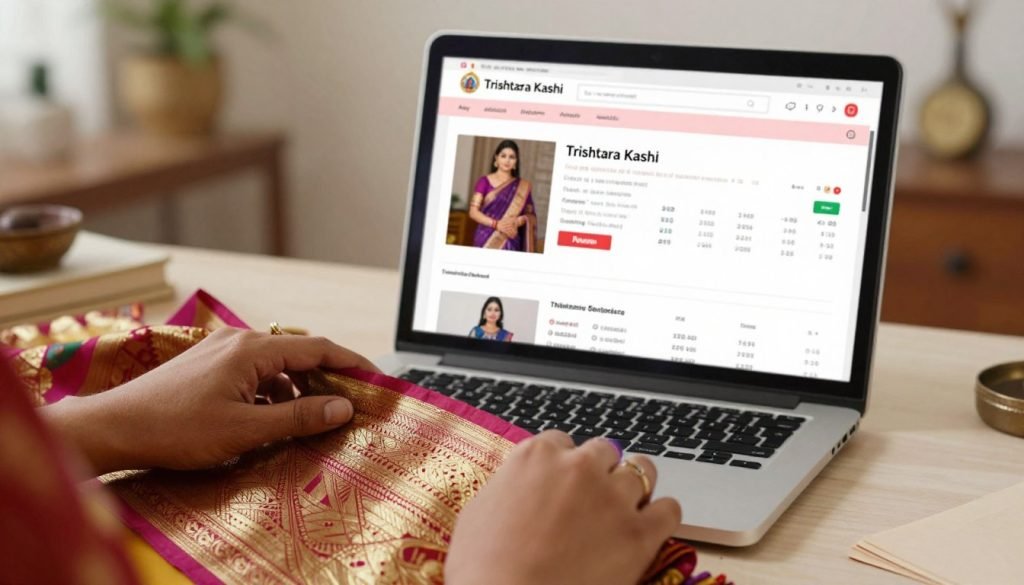
When you decide to buy banarasi saree online, the price tells a story. Real handloom work takes weeks of skilled work. If a deal seems too cheap, it’s probably not real.
Why Extremely Low Prices Are a Red Flag
Low prices mean you might get a fake. Fakes are made quickly and look like silk but cost less. Real pieces cost more because they help weavers who work hard.
When buying a banarasi saree online, remember silk and zari are pricey. A low price means it’s likely fake. Choose quality over cheap to get something that lasts.
Researching Reputable Weavers and Boutiques
Check the seller’s reputation before buying. Look for boutiques that share about their weavers. A good seller will show you their artisans at work.
For a banarasi saree for mother of the bride, choose the best. Make sure the website has contact info and a return policy. Buying from a brand that values heritage means your gift will be special.
| Feature | Authentic Handloom | Mass-Produced Fake |
|---|---|---|
| Pricing | Premium/High | Very Low/Discounted |
| Production | Hand-woven by artisans | Power-loom machine |
| Material | Pure Silk & Real Zari | Synthetic/Polyester Blend |
| Consistency | Unique, slight variations | Perfectly uniform |
Common Mistakes to Avoid When Buying Online
When you buy a banarasi saree online, it’s easy to get tricked by photos. But real quality is in the details that photos might miss. Make sure your money buys you true timeless elegance and handloom craftsmanship.
Requesting High-Resolution Close-Up Images
Always ask for clear, close-up photos before buying. These help you see the weave density and zari work. If a seller won’t show you clear photos, it’s a bad sign.
Looking closely at the fabric shows handwoven signs. This is key when buying a banarasi saree online to get the quality you want.
Reading Customer Reviews and Return Policies
Read customer reviews before buying. They tell you about the fabric’s real feel and weight. A clear return policy is also important. It protects you if the item isn’t what you expected.
These steps are crucial for a banarasi saree for mother of the bride. They ensure you make a good choice in the banarasi saree online world.
Conclusion
Having a real handloom Banarasi saree links you to India’s rich history. It’s not just a piece of clothing. It shows the hard work of skilled weavers who spend weeks on each design.
You know now how to spot real silk from fake ones. This helps you build a collection that respects Varanasi’s past. Your choices help the artists keep their old ways alive for others to see.
Real luxury is felt in the fabric’s weight and the shine of the zari. Look for items that show patience and talent. Each thread holds the weaver’s spirit and the honor of a long tradition.
Choose quality that lasts forever. Share your love for real fabrics to keep this tradition alive. Your love for the best helps keep these beautiful, handmade pieces alive for many years.